Thursday, February 7, 2013

Eubie Blake


Happy Birthday Eubie Blake 1887-1983...Born in Baltimore, Maryland to former slaves, Blake showed very early musical promise prompting his mother to buy him a $75 pump organ for 25 cents a week. At the age of 7 he was taking music lessons, at 12 he composed the "Charleston Rag" and by the age of 15 he was sneaking out of the house to play piano at a local bordello. His first big break came when world champion boxer Joe Gans hired him to play piano at his Goldfield Hotel, the first "black and tan" club in Baltimore in 1907. Blake soon joined forces with Noble Sissle as a vaudeville act duo and began working on a musical revue which would become the ground breaking "Shuffle Along", the first hit musical on Broadway written by and about African-Americans. Songs from the musical, including "I'm Just Wild About Harry", "Love Will Find a Way" and "Charleston Rag', would become standards and many of the actors, dancers and musicians in the show would go on to greater fame. The duo also made three short films in 1923 now preserved by The Library of Congress. Blake served as a bandleader for the USO during WW2 and as his career began to wind down, went to New York University, earning his degree in 2 1/2 years. The fifties saw a revival in interest in Ragtime music and Blake saw himself launching another career as ragtime artist, music historian and educator. In 1978 his early life and music became the subject of the Broadway hit, "Eubie!". He made numerous television appearances and continued to play and record late into his life up until his death at 96 (Apparently Eubie fudged his birthday to appear even more remarkable than he was . His real birth date has been identified by various documents as four years younger than the 100 he claimed to be at his death. But who really cares)


Eubie Blake and Noble Sissle


Tuesday, February 5, 2013

Carlton Coon


Happy Birthday Carleton Coon 1894-1932...Band leader, vocalist, drummer and one of the founders of the legendary Coon-Sanders Nighthawk Orchestra, the first Kansas City jazz band to achieve national recognition. Founded in 1919, the band began broadcasting live in 1922 from the Muehlebach Hotel on clear channel radio which reached a nearly national audience. They were called the Nighthawks because of their late night broadcasts from 11:30-1:00am. By 1924, their fan club had reached 37,000 members and fans were encouraged to make requests for songs by letter, telephone or telegraph, a move that proved so popular that Western Union set up a ticker tape between Coon's drums and Sanders' piano so they could be read during the broadcasts. The orchestra moved to Chicago in 1924, first broadcasting from a roadhouse and then from the famous Blackhawk during the winter while they toured during the summer. At their peak, each member of the band had their own Cord automobile in a different color with the name of the owner and the orchestra embossed on the rear. They moved to New York in 1932 for an 11 month engagement but Coon came down with a jaw infection and died. Sanders tried to keep the band going but without Coon, the public lost interest.


Sunday, February 3, 2013

Lil Hardin Armstrong


Happy Birthday Lil Hardin Armstrong...Jazz pianist, composer, arranger, singer and band leader, this talented woman was also instrumental in forming the career of her second husband, Louis Armstrong. In 1918, at the age of 25 she was working in a music store playing the latest sheet music for customers when Jelly Roll Morton walked in, sat at the piano and introduced her to the world of jazz. Hardin began to add Morton-like embellishments to the music she was playing to the delight of the customers. The store also functioned as a booking agency for musicians in and visiting Chicago and within three weeks at the job she was invited to join Lawrence Duhe's New Orleans Creole Jazz Band. In 1922 King Oliver's band picked her up next where she would meet the very unpolished but extremely talented Louis Armstrong. She took Armstrong under her wing, grooming his sartorial as well as his musical style, encouraging him to leave his mentor for Fletcher Henderson's band while she lead her own band in Chicago. Always ambitious for herself and her husband, Hardin encouraged Armstrong to return to Chicago after a year with Henderson to form their own band which would become the "Hot Five" and the "Hot Seven". Hardin would continue to record with some of the same musicians under her own name. Louis Armstrong had a wandering eye and their relationship began to cool by the late 20s. In 1931 they were separated (divorcing in 1938) and Hardin went on the form an all woman big band then a mixed gender band which would broadcast nationally on NBC radio. During the latter half of the 30's she was the house pianist at Decca, recording 26 titles as a leader and vocalist including her composition "Just for a Thrill". Although she rarely recorded during the 40s and 50s she remained active in Chicago for the last 30 years of her career. She died of a heart attack at the age of 71 playing piano at a memorial for Louis Armstrong who had passed away 4 weeks earlier.


Just for a Thrill was her composition and has been covered by many artists including Ray Charles and Peggy Lee.


Saturday, January 26, 2013

Dance Masters


As an aging but not Over-the-Hill-Yet Lindy Hop dancer, I've watched plenty of dance competitions. In most of them the average age of the competitors was somewhere around 25-35 which is not surprising since Lindy Hop is a very athletic dance and proving your skills and prowess at top speeds is a given. Even though in my fantasies I longed to get out there and dance to "Jumpin' at the Woodside" I knew that I would pay a heavy price, in body if not in ego. Secretly, I wanted some organizer to realize that there are plenty of dancers like me who are still vital and engaged in their dancing and want to celebrate Lindy diversity by showcasing them in a contest and most definitely NOT an intergenerational contest. I've been in several of those and it felt like being an oddity in a zoo (Oh, look at the old people dancing! How cute!) or in a popularity contest when the winner was chosen by applause. I wanted a real contest limited to an older age group with real judges and maybe even prizes because, why not, everyone else gets them. I eventually ran the idea by a few organizers and the response I got was, "We already have an Intergenrational contest" or "I don't think anyone would be interested". Hhhmmmm.
The idea was then put away in some back corner in the attic of my brain.

David Blood runs the Lindy Hop classes at City College here in San Francisco and I have the privilege of teaching with him. The college has been under the gun financially and any extras have been stripped away and that included funding for production classes, help with costuming, etc., for the swing classes. If we wanted to keep those important components alive we were going to have to raise the money ourselves. Since both of our birthdays fall in the month of January we decided to hold a benefit dance and joint birthday party. As I went about putting the event together, I realized this was the perfect opportunity to hold a Masters Jack and Jill myself-but would anyone actually enter it? I asked a few friends and got a positive response so I went about finding judges and asking the different organizers if they would donate prizes. I was thinking if I got five couples I would be very happy and call it a success.

I began to realize that the contest wasn't just a fun idea for Bay Area dancers over 50, but a way to showcase the more "seasoned" dancers, dancers fun to dance with but sometimes overlooked by the younger population. Some of the contestants were also dancers who were instrumental in the return of Lindy Hop to the Bay Area during the resurgence of the dance. There are a whole host of new dancers who don't know who those people are and the role they played in reestablishing the dance they love here. History is important, people. This was a way for those dancers to be seen and celebrated. The night before the event I printed out sheets for the judges and made numbers for the contestants. I had no idea how many dancers would participate but I settled randomly on the number 16 and made sets of 16 numbers for the followers and 16 for the leaders and made a sign up sheet with 16 spots for each.

To my great surprise, exactly 16 leaders and 16 followers signed up! Here they are, filling the dance floor!


Dancers had come from all over the Bay Area to participate-from San Francisco and the East Bay and from as far away as Sacramento and San Jose-and many of them, for all of their years of dancing, had NEVER entered a contest before.

Here is the first song:


You could feel the energy and support from the audience right through to the end of the fourth song. I don't believe in my wildest dreams I thought it would be that magical. Here are the names of the winners:

First Place Ken Watanabe and Cheryl McBride
Second Place Matt Horrigan and Linda Lau
Third Place Jeremy Sutton and Irene Kalwa Nute
Lindy Spirit Award Chuck Dee and Sharon Crocker

It was a very special night for me. I was surrounded by a loving and supportive Lindy Community who not only came to celebrate with David and me but who came to help the swing program at City College and to cheer on those awesome dancers!

I have to give special thanks to Nathan Dias who volunteered his time to DJ the contest, to the judges, Iris Dolowitz Tarou, Kylie Woodard, Kirk Tarou and Gilles Bouvier for also volunteering their talents and to the organizers of Epic Swing, Swingin' at the Savoy, the 9:20 Special and SF Swing Jam for donating the prizes.

The moral of the story? If you want something done, sometimes you have to do it yourself. But more importantly, if you want a thriving dance community it's important to honor not only the young, up and coming dancers on the scene, but to recognize the dancers with a few more miles on the speedometer in a real and meaningful way.

Oh, and this awesomeness happened too. This performance by Mike Daniele (72) and Corie Van Theil (75) had the audience on their feet!


The photograph at the top of the blog is of Frankie Manning and Cynthia Millman


Saturday, January 5, 2013

T'ain't What Ya Do, It's the Way that Ya Do it


"How can I make myself look good as a dancer?" It's a question I've been getting from students lately. They have gotten themselves to a level where they feel comfortable on the dance floor as a social dancer but they want to improve the quality of their movement. All of us move in a way that is unique to ourselves but there are some things you can do as a dancer to make your movement smoother and more stylish-and more "you".

When your mother told you to stand up straight she was doing you a favor. As dancers, we can only work with the body we've grown into and if we have created bad habits in posture along the way, we'll need to break those first. Pay attention to how you move as you sit, stand and walk. Ideally we should be creating a straight back by engaging our core (the area around the middle of your body, especially the abdominal muscles) dropping our shoulders and pulling our shoulder blades down toward the floor and stacking our neck and head directly over that. As children we did that naturally.

You can do that sitting there now as you read this. If you consciously practice good posture during the day it will stop feeling awkward and start feeling GOOD. Your body will thank you! Get a buddy to remind you when you head back to your old habits.

Stretch! Once we pass our 30's it's a cruel truth that we start to loose our natural strength and flexibility. Take a yoga class, a Pilates class, a dance strengthening class or a ballet class. All of those classes will work on your core too. And, do sit-ups. Yeah I know, I hate them too.

Work on balance (see classes above) You can also do simple balance exercises at home. Stand on one foot with the other foot slightly raised for 10 seconds, then change feet and do the same. Do it 10 times. Do that but bend the standing knee as well. Do that but raise a bent knee even with your hips. Now, do all of that with your eyes closed. You will find that if you engage your core it will be easier and if you are barefoot you will get a good sense of how you distribute your weight. Knowing where you are shifting your weight as you dance makes your dancing look smoother and allows for more precise leading and following.

Work on endurance. When you are in better aerobic shape you will feel less winded and look more energetic as you dance. You'll also be able to dance more dances.

Have someone take video of you when you are dancing. We all hate watching ourselves dancing but try doing this exercise as you watch the video. Look at yourself as just another dancer on the floor. Find two or three things about that dancer that looks good to you (examples might be: they are engaged with their partner, they added some fun footwork at one point, they have a nice bounce in that Charleston) Now find one or two things that could be better (they are pulling themselves toward their partner in the swing out, they look at the floor too much) Those are your dance goals for now. Wait a while and then ask to be videoed again and check on those goals. Change them as you improve.

As you watch the videos you'll start to recognize a certain style or way of moving that comes naturally to you. Look at dancers on YouTube and try to find people who match your style. Watch them and copy them. All art is derivative. If you go to any major art museum you will find students sketching and, if allowed, painting what the Masters before them have created. Just be aware that to be a carbon copy of someone is not the goal. You are learning from them in order to be a better dancer who dances like you.

Stephan and Bethany dance differently than...


Juan and Sharon, who dance differently than...


Kevin and Jo


Variety is the spice of life! By the way, those dancers didn't just jump onto the dance floor right out of the gate looking like that. They worked hard to develop their style and work hard to keep evolving.

Loosen up! When you go out social dancing people are going to watch you and sometimes they will watch you intently and YOU WON'T EVEN KNOW IT! If that fact freaks you out you might as well go back to dancing to Abba in your bedroom. Dance time=playtime...otherwise why would you add an extra chore to your life? Put yourself in a dance bubble with your partner and make them the only other person in the room. Smile more, laugh if something funny happens, cheer your partner on, encourage play in your dancing and you will discover more about your dancing style. As an exercise, join the Ministry of Silly Walks.


Well, you don't have to be that silly if you don't want to, but when you have a distance to walk try to vary how you walk every block. Dance in slow motion, dance like you are underwater, or on fire or weightless. Think of an animal and dance like it might if it stood on two legs. You might just come up with something awesome. Someone came up with the Camel Walk, right? Do it in front of a mirror and try to repent the moves you like the best. Video yourself doing it.


Above all, to thine own self be true-dance like YOU.


Tuesday, May 1, 2012

Mike Daniele


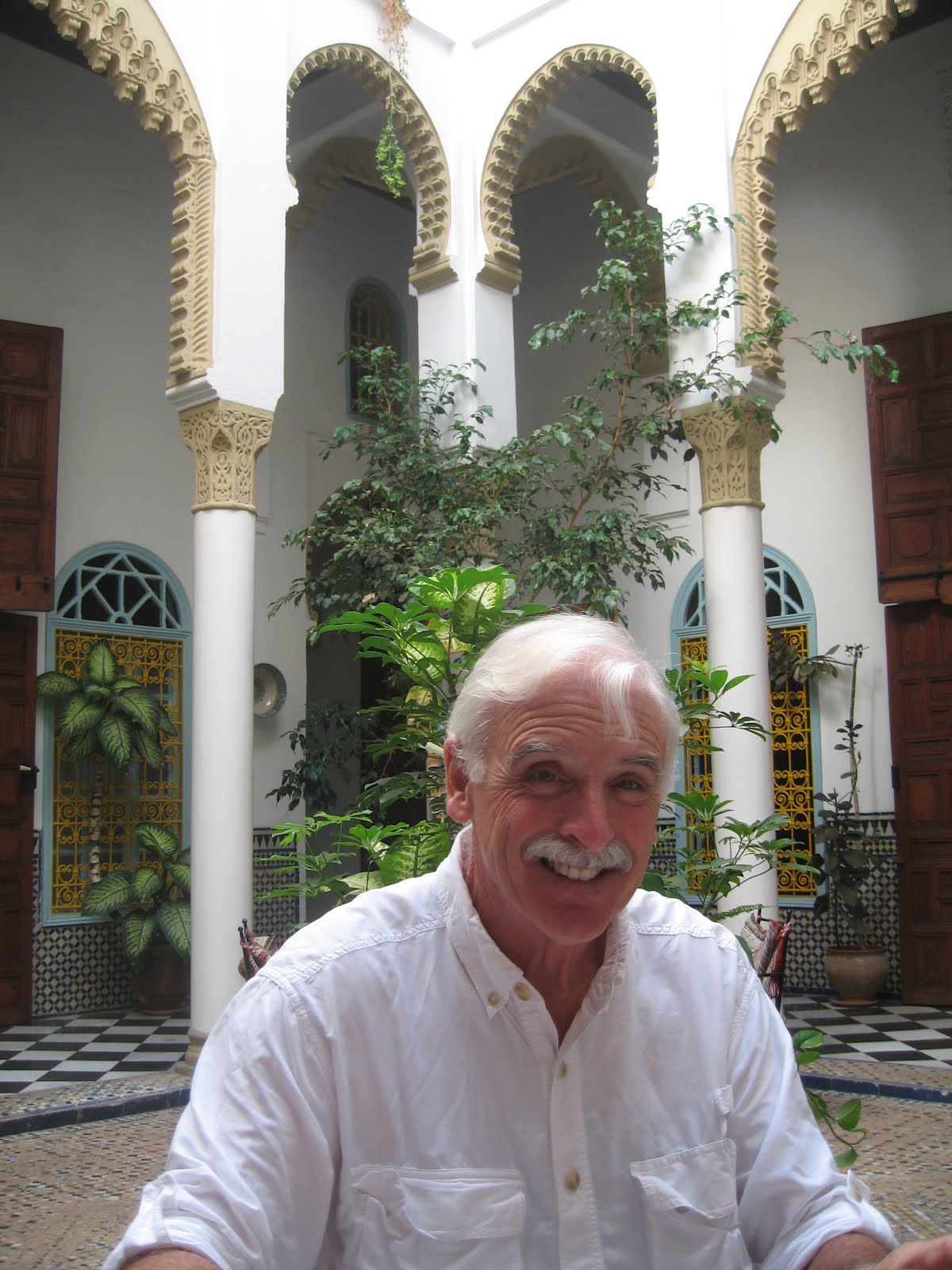
You can't miss Mike Daniele on the dance floor. Just look for the shock of silver-white hair, the sparkling eyes and the smooth moves. Mike is a life-long dancer and student of the dance and an active supporter of swing dance in all forms. He's also an amazing cook and gardener. When I asked Mike if he would share his dance history with me I had no idea how extensive it is. I know you'll enjoy it as much as I did. Here's Mike in his own words. Oh, and by the way, don't forget to say "hello" when you see him and ask him to dance (or ask him about those amazing syncopations. He's just as fun to talk to as he is to dance with.)


"I was born September 3, 1940 and raised in San Francisco. In 1946 I was a very small part of a very large Sicilian family. My Aunts and Uncles were all Swing Dancers during the 1930's and 1940's. Most of them danced five times a week.
I was six years old when it was my turn to learn how to Swing Dance. I went into the dance room where my aunt was playing Big Band music. She told me to pick one instrument playing the music. I told her I liked the Trombone. She told me to "express" myself as the Trombone. I did my best to do what she told me to do. (Please remember I was only six)
As my lessons went on she asked me to express myself to the other instruments playing the music and to "express myself with attitude". I can only imagine with I may have looked like. I'm glad there are no pictures.
After a time my aunt would "dance", expressing herself as a different instrument playing the music. I had to watch her and listen to the music to find what instrument she was "dancing". Once I thought I had it I would "dance" expressing myself using the same instrument. The moment I had it she would change and "dance" to a different instrument. She repeated this process and every time "I had it" she, with that smile on her face, would change her selected instrument.
Holding hands and moving in various ways, she now began to "express herself" and danced the melody. As she danced, I was taught that I could either dance the melody with her, or better yet, I could dance the base and support her dancing the melody. There were no counts, as in six counts for this move or eight counts for that move, to what we danced. We danced using the composition of the instruments and overall timing of the music to provide our timing in the dance. We did focus on dancing "composed phrases" which were usually 32 counts of music.
I should note here that my Mother put me in tap dancing lessons when I was five. With this year of tap experience I had some advantage to "expressing" myself to the rhythms of the music.
I competed in my first Jack and Jill when I was eight. I won a hot dog! Just thought I would share that WOW moment.
Between the ages of six and thirteen, my family took me swing dancing at least once a week. I had some girl swing dancing cousins, some older, some younger. My aunts and cousins, and many other ladies, gave me the opportunity to experience the dance. Looking back, I am so grateful for all of those gracious ladies who helped a little boy swing dance.
I remember dancing in the back room of the Club New Yorker, obviously way under age. Josephine, the mother of Frankie Mannion (World Swing Dance Hall of Fame and beloved Bay Area dancer and teacher) and her daughter Joan would for years always take the time to dance with me.
My uncles, some of who were in the Merchant Marines during WW2, shipped out of LA. While in LA. they would swing dance at the Palladium. They brought home what they learned there and shared it with the rest of the family. When the war was over my uncles were able to give me some swing dance lessons.
I was a "Swing Dancer". The dance was not East Coast, Lindy, Jive nor Jitterbug. West Coast did not exist during those years.An example of what my uncles taught me was a movement they called the LA Whip. It began in open dance but with an attitude stance. We came together and I led a 720 degree "accelerated" turn. The idea was to accelerate the turn to a speed where when the lady was "thrown out to open dance" she did so with her feet airborne. When she landed she would face away from me and then, with a snap of her head, she looked back at me at the end count. When she snapped her head back at me I would "slam" the floor with my foot. The movement was akin to the snap and sound a whip makes when it pops.
I did a lot of swing dancing in the 1950's, somewhat less in the 1960's and 1970's. "Free Style" seemed to be the dance of the time. Swing Dance opportunities improved through the 1980's.
In the early 1990's I lived in Tracy and I joined a group of friends who danced West Coast. My method of Swing Dancing did not work well with some West Coast followers. They expected me to use very defined patterns of movement, no matter if the movement went with the music or not. I kept listening for the Ta-Ta-Te-Te-Te-Ta-Ta-Te-Te-Te repeated for 32 counts. I must admit, I could not hear it. I was lost.
I decided to take West Coast Swing private lessons from Phil Trau, a recent four time US Open Champion. I think I first took private lessons every Saturday along with his Beardsley's Wednesday night group lessons. I also took my daughters, Ninette at 7 years old and Rachelle at 5 years old, to Phil for their own private lessons. I was doing my best to keep up with the family swing dance tradition. I believe we did two years of privates with Phil. I continue to dance at Beardsley's every Wednesday night.
We then moved to West Coast private lessons with Randy and Stephanie Krul of Two Left Feet. They are both great instructors who were dedicated to making us all better dancers. We stayed with them for about two years.
Ninette and Rachelle were in 4H. I was the 4H dance project leader for San Joaquin and San Mateo counties. I had about 50 children in the dance projects ages 12 to 18. I taught them how to dance West Coast Swing and Cowboy Two Step. Every Friday night we would go dancing. It was a caravan of vans. We danced at various venues including Two Left Feet and the Cowboy Country Club. We choreographed swing routines and performed at various clubs and fairs.
In 2001, Rachelle, uncomfortable with how the West Coast followers were using "sex" to sell their dance, asked me to take Lindy with her. I said "yes". I lost 47 lbs. in the first year! I was dancing to the same music in which I had expressed myself as a boy. I was dancing with enthusiastic, creative followers full of musicality. Lindy dancers continue to express themselves with EXCITEMENT and FUN!
One morning in December 2005 I was looking in the mirror and I thought, "I need a last hoo-rah". "Hoo-rah?" you may ask. "Hoo-rah" as in, I need to do something, one thing, in these later years of my life to try to better myself and be all I can be in that one endeavor.
I chose Swing Dancing!
I called Buddy Schwimmer and explained what I wanted to do. We talked and he liked the idea AND he made me a deal I could not refuse! Once a month I would take six hours of private lessons from Buddy. Buddy's studio is in Redlands, California. This called for air travel and would be an adventure to say the least.
On January 5, 2006 I began my swing dance lessons with Buddy. The lessons were scheduled from Saturday morning 10 am to noon, we would go to lunch and then back to the studio for one more hour. We repeated the same on Sunday. I was fortunate in there were many followers who were more than willing to help me with my lessons. My first six hours of lessons included: 11 Underarm Turn variations, 4 variations of Tuck Turns, 5 different Sugar Pushes, 6 variations of Left Side Passes, 14 different Whips and 8 variations of Right Side Passes.
I have a complete video history of ALL of Buddy's lessons. I further documented in writing All the lead and follower's movements for each pattern. I included each pattern's rhythm options, syncopation variations, various hand positions, along with applied technique and styling applications for both the leader and the follower. I have LOTS OF STUFF!!
In June 2006, Buddy opened his Father's Swing Dance Book (a compilation of his moves). Buddy told us that his father had competed against Shorty George and WON! My daughter Rachelle and I looked forward to dancing Buddy's "Dad's Stuff".
Rachelle and I were instructed in approximately 100 of Buddy's dad's swing patterns. Some of the movements and patterns included: The New York Style Lindy, Flying Lindy, Dad's Shag, Chorus Girl, Off Beat, Savoy, Flying Feet, Sling Shot, Neck Drops and the Death Drop to name a few. Buddy choreographed a routine for Rachelle and I.The routine was 1/3 West Coast to Tom Jones' If You Only Knew and 2/3 Lindy to Bette Midler's Boogie Woogie Bugle Boy. The only competition division we, as a young lady of 19 and her Daddy at 66, could enter was Showcase. Buddy put the required "lifts" into the routine (little easy ones). Rachelle and I demonstrated the routine at six venues including the Atomic Ballroom. We performed the routine once in a Showcase competition at Buddy's World Swing Dance Event. Rachelle's college schedule conflicted with our plans to perform a more advanced version of the routine but I, as Daddy, had danced with my daughter in a Showcase Competition. What a memorable life's moment. Unforgettable!
In his lessons, Buddy explained that Swing Dancing has three basic rhythms. They are: triple-triple (as in the starter step), double-triple-triple (as in six count movements) and double-triple-double-triple (as in eight count movements). There are countless ways to dance these rhythms without violating the basic rhythms. Any double may be danced with your Feet as a two or four. Any triple may be danced with your FEET as a one, three or five count. There are many options selecting a one count in the triple. The five count is & 3 & 4 &. Weight down on any one count or weight on the first & and hold for the other four is still only one weighted step. Likewise, there are many options for stepping a triple. You may select 3 & 4, & 3-4, 3-4 &, for example. There are endless variations to dancing the 5 count.
I have in my swing files six hundred syncopations which do not violate the basic rhythms. The dancers may add these syncopations to any of the above selected rhythms. These syncopations are basically applied in three categories. The first category of syncopations may be applied in the beginning of a pattern. The second category may be applied to the middle of the patterns and the third category may be applied to the endings of a pattern.
Other variations which may be added to the dance patterns are hand positions. These options are: leader's left to follower's right, left to left, right to right, right to left, two hand, left over right, right over left. Now add the option of all those rhythms, the mix of 600 syncopations and apply all the hand variations to 800 different defined patterns and you have the "Swing Dance" I know and now study. Be it Lindy or West Coast Swing, makes no difference, it's all Swing!
Buddy Schwimmer choreographed another routine for me and my partner that we competed with at Dallas Dance and the U.S. Open. I continued taking six hour monthly privates from Buddy for 5 and half years. This doesn't mean that I am a great Swing Dancer but it does mean I know a lot of "stuff"!
I'm grateful at 71 years old that I can continue to be a student of the dance I call Swing."


Besides his intensive study and practice of Swing Dance, Mike, as a board member of the California Swing Dance Hall of Fame, has also been instrumental in honoring people and organizations who have made significant contributions to the California Swing Dance community. Here is the concept paper he submitted to the board and the awards that were given as a result of his work.

"In August 2009 I was appointed by the California Swing Dance Hall of Fame as a member of their Board of Directors. I was motivated to become a director by my long held desire to somehow say "thank you" to the various dance venues that serve our swing dance community. In December 2009, I submitted a "Concept Paper" to the Board of Directors. I titled the paper, "In Recognition of an Outstanding Contribution to the California Swing Dance Community". I included the following definitions and criteria for the entries to be considered for recognition and award:

1. The Business Organization: The establishment and continuation of a business organization which has offered, for a minimum of twenty five years, swing dancing and swing dance lessons which are open to the community at large. The minimum requirement of one swing dance, with it's associated swing dance lesson per month, or one swing dance convention/exchange per year. If the originating principles continue to operate the business at the time of the awards, their names shall be engraved on the award plaques.

2. The Dance Club: (A 'Club' with elected officials and voting members). The establishment and continuation of an Official Swing Dance Club which has offered, for a minimum of twenty five years, swing dancing and swing dance lessons, which are open to the community at large. The minimum requirement of one swing dance, and it's associated swing dance lessons per month, or one swing dance convention/exchange per year.

3. The Volunteer Organization: The establishment and continuation of a volunteer organization which offers, for a minimum of ten years without financial compensation, free swing dancing and free swing dance lessons.

4. The Volunteer Individual: Three categories of awards for the 'Recognition of an Outstanding Contribution to the Californian Swing Dance Community'.

a. A Fifteen Year 'Plaque Award': in recognition of the volunteer individual who has established on or about fifteen continuous years of volunteer service to the Swing Dance Community.

b. A Ten Year 'Plaque Award': in recognition of the volunteer individual who has established on or about ten continuous years of volunteer service to the Swing Dance Community.

c. A Five Year 'Plaque Award': in recognition of the volunteer individual who has established on or about five continuous years of service to the Swing Dance Community.

In January 2010 the Board appointed me to form a committee to investigate the feasibility of the concept.

In February 2010, the Board adopted my concept as policy to be immediately implemented by the CSDHOF.

I surveyed nineteen business's, seven Clubs, three Volunteer organizations and three Volunteer individuals. In November 2010, at the CSDHOF Awards Event, it was my honor to present the Plaque Awards in Recognition of an Outstanding Contribution to the California Swing Dance Community. The 2010 winners of the awards were as follows:

Business category: Top of Beardsleys, 100 North B St., San Mateo, CA. Founded June 1978 and continuously serving the swing dance community for 32 years. Note: April 29th I attended their 34th anniversary.

Club category: Los Angeles Swing Dance Club, 6285 E. Pacific Coast Highway, Long Beach, CA. Founded November 1970 and continuously serving the swing dance community for 40 years.

Volunteer Organization category: Lindy in the Park, Golden Gate Park, San Francisco, CA. Founded August 1996 and continuously serving the swing dance community for 14 years. Note: Dancing at Lindy in the Park is truly a unique experience. LITP continues every Sunday. See you there!

Volunteer Individuals category:

Ken Watanabe, Lindy in the Park, served continuously from August 1996 to date.

Naomi Walenta, Lindy in the Park, served continuously from 1999 to date.

Jennifer A. Holland, Lindy in the Park, served continuously from 2004 to date.

Note: I solicited the help of Rebecca Shannon and David Blood to establish a fundraiser to send Ken, Naomi and Jennifer, 'all expenses paid' to the HOF awards event in Los Angeles. At the fundraiser dance we also recognized and presented 'Plaques' to the originators of Lindy in the Park, Chad Kubo and Ken Watanabe.

Rebecca and David were instrumental in making the fundraiser dance a success. Their contribution to our swing dance community has always been and continues to be invaluable.

In addition to the above, I ,as Director, nominated for induction into the California Hall of Fame, Carla Heiney, Nick Williams, Buddy Schwimmer, Lacy Schwimmer, Torri Smith and Hannah and Nicole Clonch. All except Hannah and Nicole were inducted into the Hall of Fame.

I was instrumental in the Hall of Fame specifically including "Lindy" categories for nomination and induction into the Hall of Fame. Our Lindy 2010 inductions into the Hall of Fame were an overwhelming success!

I am grateful for the opportunity to serve our Swing Dance Community.

The only thing greater than the dance is the people who make it happen!"

Mike Daniele

I have to add that it was a real pleasure working with Mike and David on the LITP fundraiser. Mike was so passionate about having LITP and Lindy Hop categories recognized that his enthusiasm was infectious. He has made a very real and important contribution to swing dancers and swing dance organizations in the the state of California.
Thank you Mike!





Tuesday, February 21, 2012

Dancing History


Most of us start learning Lindy Hop because we love the music or the happy movement and free looking form. It usually takes a little time before we start to understand that we are actually dancing history. Someone might mention Frankie Manning or Hellzapoppin and we stare blankly until someone steers us toward Youtube and that eye opening video. I think Hellzapoppin is the best gateway drug to Lindy addiction. If we are Lindycurious we'll spend a good deal of our none dancing free time looking at old videos trying to pick apart what makes great Lindy Hop great, listening to scads of vintage music and maybe even exploring vintage fashions and hair styles. What we are doing is learning history.

The period of time when Lindy Hop was being invented was a rich one in our country and the world. It's worth digging in deep to understand what was happening in politics, social culture, music and art during that time. For many of the people who first danced Lindy it was a dance of freedom. It was freedom of expression and creativity. It was freedom from racial repression and low paying dead end jobs. It was freedom from the daily grind, the constant struggle to make ends meet, and the crowded living conditions. Understanding that brings a bigger dimension to what we now do on the dance floor. Perhaps some of us still dance Lindy for those very same reasons.

We are lucky that there are still a few people who were there from the beginning who can still tell us personally what their experience was like. If you get the chance to meet them and hear their stories, do it! There is nothing sweeter than hearing those stories first hand. They can open a different world to you and illuminate some of the when's,where's and why's. Grab the treasure while you still can.

Some of the history is lost or can be somewhat pieced together from tantalizing clues. My favorite Swing Dance historian is the dancer Bobby White. He writes a terrific blog called Swungover, chock full of juicy history and antidotes among other things. You can find it here:http://swungover.wordpress.com/

When you understand the beginning of something it's easier to understand it's evolution. Lindy Hop continues to evolve as a dance but for it to continue to be Lindy Hop it's important that it's roots are always showing.